A worn garage door bottom seal can let in drafts, dust, leaves, and water. To learn how to replace garage door bottom seal, first match the new seal to the channel at the door’s base. A simple replacement may suit a steady door with an undamaged channel, but never work on springs or cables.
Table of Contents
- How can you tell if your garage door bottom seal needs replacing?
- What type of garage door bottom seal do you need?
- What tools and safety steps do you need before starting?
- How do you remove the old garage door bottom seal?
- How do you install a new garage door bottom seal?
- How can you stop water from getting under the garage door?
- When should you call a garage door repair professional?
- Frequently Asked Questions
- Key takeaways
- Conclusion
How can you tell if your garage door bottom seal needs replacing?
A worn bottom seal may look cracked, flat, loose, or partly missing. With the door closed, look for daylight or gaps along the floor. Drafts, dust, leaves, or water inside the garage can also mean the seal no longer touches the floor well.
Check the whole seal, including both ends and the middle. A gap near a corner may mean the seal moved or shrank. If it is torn or feels hard when pressed gently, it may not bend enough to cover small floor gaps. Keep your hands clear of the door and its moving parts while you check.
Is the seal worn, or is the threshold the problem?
A threshold is a raised strip fixed to the floor below the closed door. It can help block water when the floor has low spots or slopes toward the garage. If the seal looks whole but water still gets in, check the floor and threshold before buying a new seal.
A new seal cannot fix a door that sits crooked or stops above the floor. Watch it close from a safe place. If one side stays high, the door shakes, or a large uneven gap remains, stop using it and get help. Alamogordo Garage Door Repair can help property owners tell a worn seal from a larger door problem.
What type of garage door bottom seal do you need?
The new seal must fit the retainer at the bottom of the door. A retainer is the metal or plastic channel that holds the seal. Retainers and seal slots come in different shapes, so a seal that looks close may still slip out or sit unevenly.
Common seal shapes include T-shaped, bulb-shaped, and U-shaped styles. Some doors use a wide loop or a seal made for one certain track. The right choice depends on the retainer shape, the slot size, the door width, and the gap below the door. Match the seal to the parts already on your door rather than guessing.
How can you check the seal profile?
With the door closed and steady, look at the end of the old seal. A clear photo of that end can help you compare shapes when choosing a replacement. If the end is hidden, do not pull the seal out just to see it. Check the door maker’s guide or ask a supplier to help you match it.
Measure the door and old seal only if you can do so safely. Follow the new seal maker’s directions for measuring and trimming. Do not guess from a seal on another door, since the retainer may be different. If the retainer is bent, rusty, or hard to identify, Garage Door Maintenance can include a closer check before a new seal is fitted.
What tools and safety steps do you need before starting?
A simple seal change may need a matching new seal, gloves, a tape measure, and a tool for cleaning the retainer. Some seals also need careful trimming with a suitable hand tool. Read the product directions first, because the right tools depend on the seal and channel.
Keep children, pets, and stored items away from the work area. Use good lighting, and never work under a door that moves, looks crooked, or will not stay in place. Do not loosen a cable, spring, bottom bracket, or other part that holds door tension. These parts can move with great force and cause serious harm.
How can you prepare the work area safely?
If the door works safely, close it before you check the bottom edge. Disconnect the opener only as its guide says, and keep the remote away from anyone who might use it. Do not trust the opener to hold a door in place. If the door feels heavy or moves on its own, stop and call a trained technician.
Before you start, look for loose parts, sharp edges, damaged tracks, and trapped dirt. Keep your fingers out of the retainer slot and away from the door joints. A basic seal change should not require work on springs or lift cables. If it seems to need that work, it is not a safe do-it-yourself job.
How do you remove the old garage door bottom seal?
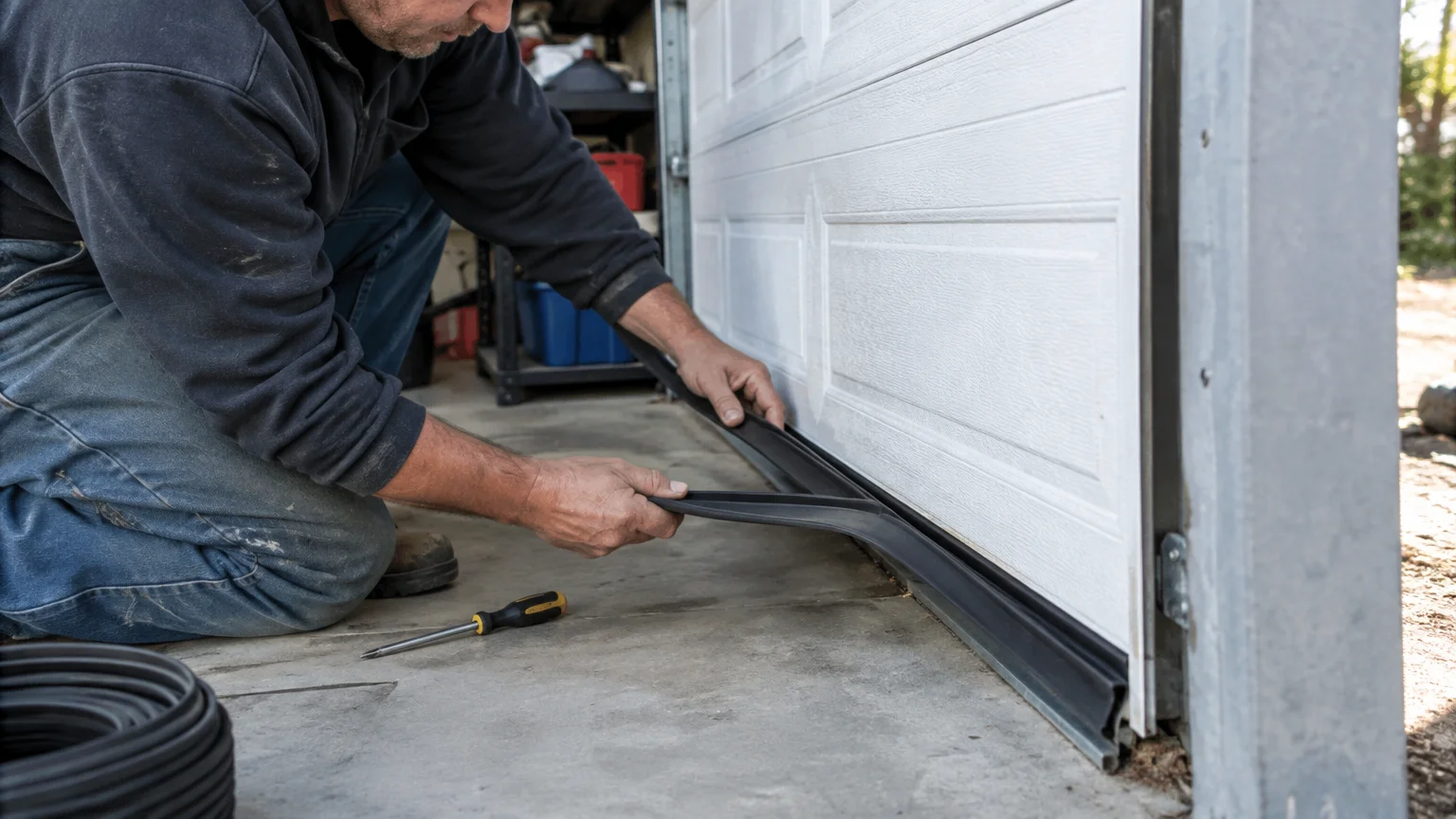
Remove the old seal only when the door is steady and the retainer is in good shape. Many seals slide out from one end of the channel. Others use clips or a different design. Follow the door or seal maker’s directions instead of pulling hard or guessing how it comes out.
Step 1: Check how the seal is held
Look at the end of the retainer to see how the seal fits. Remove a simple end cap or clip only if the maker’s guide explains how. Do not pry against the door panel or bend the channel. If the seal will not move with gentle effort, pause and check its design.
Step 2: Slide out the old seal and inspect the track
If the seal slides freely, pull it along the retainer without twisting. Work slowly, and stop if the channel bends or the seal catches. Once it is out, wipe the channel with a cloth and use a soft brush to clear loose dirt. Do not cut or reshape the retainer.
Check the channel for rust, sharp damage, or parts pulled away from the door. A damaged retainer can keep a new seal from sitting flat. Do not try to straighten it while it is attached if that could affect the door. Ask a garage door repair professional to check damage that is more than light surface dirt.
How do you install a new garage door bottom seal?
A new seal should fit the clean retainer without force. The right method depends on the seal shape, so follow the maker’s directions. A seal that twists, stretches, or sits partly outside the channel may leave gaps and wear sooner.
Step 1: Fit the replacement seal
Line up the new seal with the retainer opening. Feed it in a little at a time, and keep it straight as it moves along the door. If it sticks, stop and check that the shape matches the channel. Do not force it with a sharp tool or pry the channel open.
Step 2: Trim and check the fit
Trim the seal only as its maker directs. Use a suitable tool and keep your hands away from the cutting edge. The ends should sit neatly without bunching or leaving a large gap. Put back any simple end caps you removed if the product directions say to do so.
Close the door and look along the bottom from a safe place. The seal should touch the floor evenly without folding under the door. If it pushes the door out of line or leaves a clear gap, stop. Check the seal fit and floor shape, but do not adjust springs or cables to make it work.
How can you stop water from getting under the garage door?
First, find where the water comes in. A worn seal may let water pass under the door, but a sloped driveway, low floor spot, or blocked drain can also send water inside. After rain, look at the floor and note whether water comes in along the whole door or just one area.
What should you check around the door?
Check for an even gap when the door is closed, a seal that touches the floor, and a threshold that stays in place. Clear leaves and dirt from outside the door. Do not change the door’s position or loosen parts to close a gap. A crooked door may need repair, not a different seal.
A garage door threshold may help when the floor is sound but water still reaches the door. It is a raised strip fixed to the floor and made to work with the bottom seal. Choose one that fits the door and floor, and follow its maker’s fitting guide. A threshold cannot fix poor drainage, a damaged door, or water coming through a wall.
In Alamogordo, heavy rain can make small gaps easier to notice. Check the area after wet weather, but stay clear of a moving door. If water keeps coming in despite a sound seal and threshold, have the floor slope, drainage, and door fit checked. The source of the water matters when choosing the right fix.
When should you call a garage door repair professional?
Call a professional if the retainer is damaged, the door sits unevenly, or the seal will not come out without force. Stop if the door feels heavy, moves by itself, comes off its track, or has a loose cable. These signs may point to a door problem beyond simple seal care.
Which signs mean the job is not a DIY repair?
Do not handle a spring, lift cable, or bottom bracket. These parts help hold the door’s weight and can release force if moved the wrong way. A trained technician has the right tools and skills to check them safely. Garage Door Off Track Repair and Garage Door Cable Repair address problems that a new bottom seal cannot fix.
A dead opener or a door that will not open may point to a separate fault. Do not keep trying to force the door. A professional can check the opener, tracks, and door parts to find the cause. Alamogordo Garage Door Repair serves Alamogordo and nearby areas, including Boles Acres, La Luz, Cloudcroft, and Tularosa. A technician can help tell whether the next step is a seal, threshold, or door repair.
How can you help a new seal last?
Keep packed dirt, leaves, and grit out of the seal and retainer. Clean them gently when needed, and check for splits or loose spots during normal garage care. Avoid harsh cleaners unless the seal maker says they are safe. Do not pull on a stuck seal or use it to lift the door.
Frequently Asked Questions
Can a homeowner replace a garage door bottom seal?
A homeowner can often replace the seal when the door is steady, the retainer is sound, and the old seal slides out without force. The job should not involve springs, cables, or bottom brackets. Stop and get help if the door is crooked, heavy, or hard to move.
How do you know which replacement seal fits?
Check the old seal’s shape and the channel that holds it. Measure the door as the seal maker directs, then match the seal shape to the retainer. If the channel is hidden or damaged, check the door maker’s guide or ask a professional to identify the right type.
Can a new seal stop every water leak?
No. A new seal may help when water slips through a gap under the door, but it cannot fix poor drainage, a sloped floor, or water entering through a wall. Find where the water starts and check whether the door touches the floor evenly before choosing a fix.
Should a garage door threshold replace the bottom seal?
A threshold usually works with the bottom seal rather than taking its place. It can add a raised barrier where the floor is uneven or water reaches the door. Follow the threshold maker’s directions and make sure the door opens and closes without catching or shifting.
What if the seal will not slide out of the retainer?
Stop pulling if the seal catches or the retainer starts to bend. Some seal designs use a different method, and force can harm the channel or door. Check the maker’s guide. If the seal stays stuck or the retainer looks damaged, ask a garage door professional to check it.
Key takeaways
- Check the whole seal for cracks, gaps, loose spots, and signs of water.
- Match the new seal to the retainer instead of choosing by looks alone.
- Only try a simple replacement when the door and retainer are steady and sound.
- Never adjust springs, cables, or bottom brackets as part of seal work.
- Look for drainage or floor problems if water remains after fitting a sound seal.
Conclusion
A sound bottom seal helps close the gap under a garage door, but it must fit the retainer and touch the floor evenly. A homeowner can often replace a worn seal when the door and track are steady. Spring, cable, bracket, alignment, and retainer problems need a trained repair professional.
For property owners Alamogordo Garage Door Repair can help check a seal concern before it leads to a larger door problem. If the door is uneven, the retainer is damaged, or the seal will not come out safely, Contact us today.
If you are not sure what you are dealing with, it is worth having someone look at it before it turns into a bigger job. Get in touch with Alamogordo Garage Door Repair today and we will tell you where you stand.